

Theory
Technology
The History of the Chain
The term “chain” can be traced back to the Latin word “catena” and the Old German word “kutti” (row, flock). The history of the chain began as jewelry; in the Bronze Age (approx. 200 BC), link chains were worn as ornaments. Subsequently, many scholars studied the chain, including the Greek engineer Philo of Byzantium in his books “Mechanike Syntaxis,” as well as Leonardo da Vinci, who often sketched articulated chains in his drawings that are very similar to the block and leaf chains common today.
A chain-and-bucket pump was built as early as the 1st century BC by the Roman architect and engineer Marcus Vitruvius Pollio. In 1634, the Englishman Ph. White received the first patent for the first iron anchor chain. In 1813, Th. Brunten designed a link chain with stud links. However, the chain only gained its significance with the onset of industrialization. In 1829, the Frenchman André Galle invented the Galle chain named after him, and in 1880, the Swiss H. Renold acquired the patent for the steel articulated chain in England. After that, the chain continued its success story; it was used in mining, agriculture, and everywhere else, as it was now available in large quantities through industrial production.
200 BC: Jewelry and cauldron chains
100 BC: Chain-and-bucket pump with link chain
1634: 1st patent for Ph. White (iron anchor chain)
1813: T. Brunten invents link chain with stud links
1829: A. Galle invents Galle chain
1880: H. Renold receives patent for steel articulated chain






































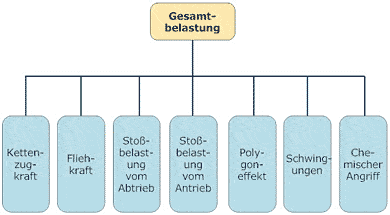
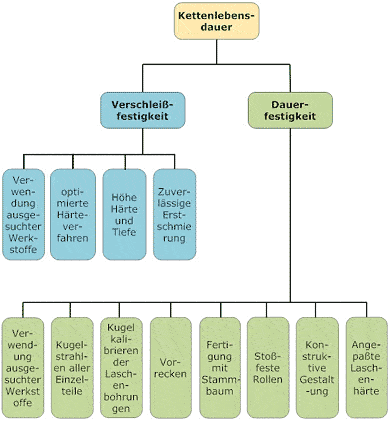
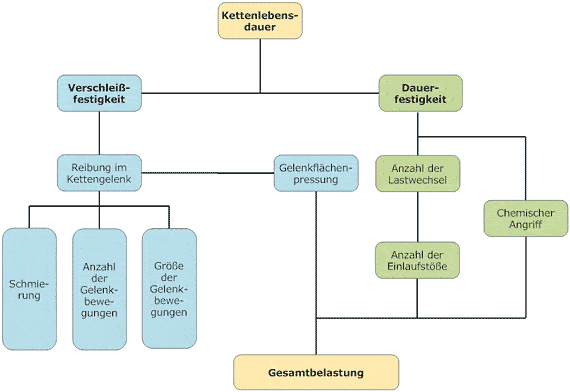
Analysis of chain service life during operation
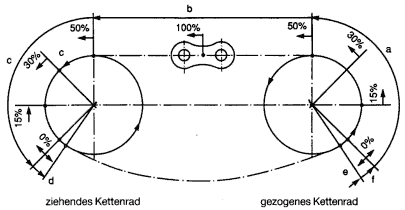
Force distribution in a chain
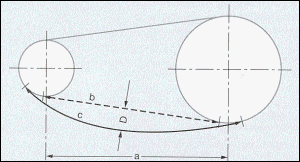
Slack (slack side) of a chain
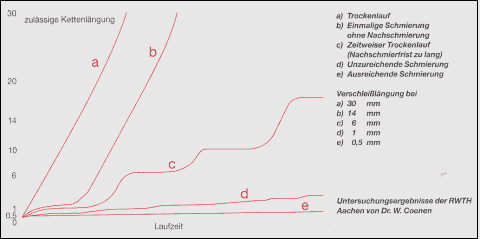
Influence of lubrication on chain service life
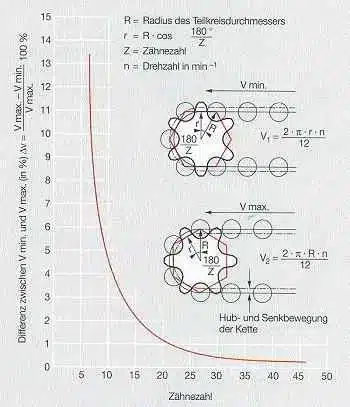
Polygon effect